
Hand in Hand for Better Food🤝
Rootical was born from the idea that (East) Africa’s food future should not be designed elsewhere. It should be built here, by people who understand the land, the seasons, and the culture that shapes how food is grown and shared in Uganda and the region. Our work is about helping founders turn that understanding into real business ventures that regenerate the soil, create fair livelihoods, reverse global warming and bring healthy food to local and territorial markets.
📌Why this matters for Uganda
📍In Uganda, agriculture is at the heart of almost every household. Most people depend on it directly or indirectly, and when farming suffers, the whole community feels it.
📍At the same time, Uganda still imports a lot of what it eats. This makes us vulnerable to global shocks, price changes, export bans, and currency risks. The paradox is that we have the land, the people, and the knowledge to feed ourselves and about 150 million people more. What’s missing is the link between those who produce and those who innovate.
📍That’s where Rootical tries to make a difference. We bring together people who are working on practical ideas for new ways of growing, processing, and distributing food and help them test and grow those ideas into businesses that make sense for farmers and consumers alike.
📍We don’t do this by providing one-size-fits-all solutions. Instead, we listen, we test, and we adapt together. While the path to business success is rarely straight, synchronizing farmers, founders, global and local partners is essential for building profitable businesses and lasting impact at scale.
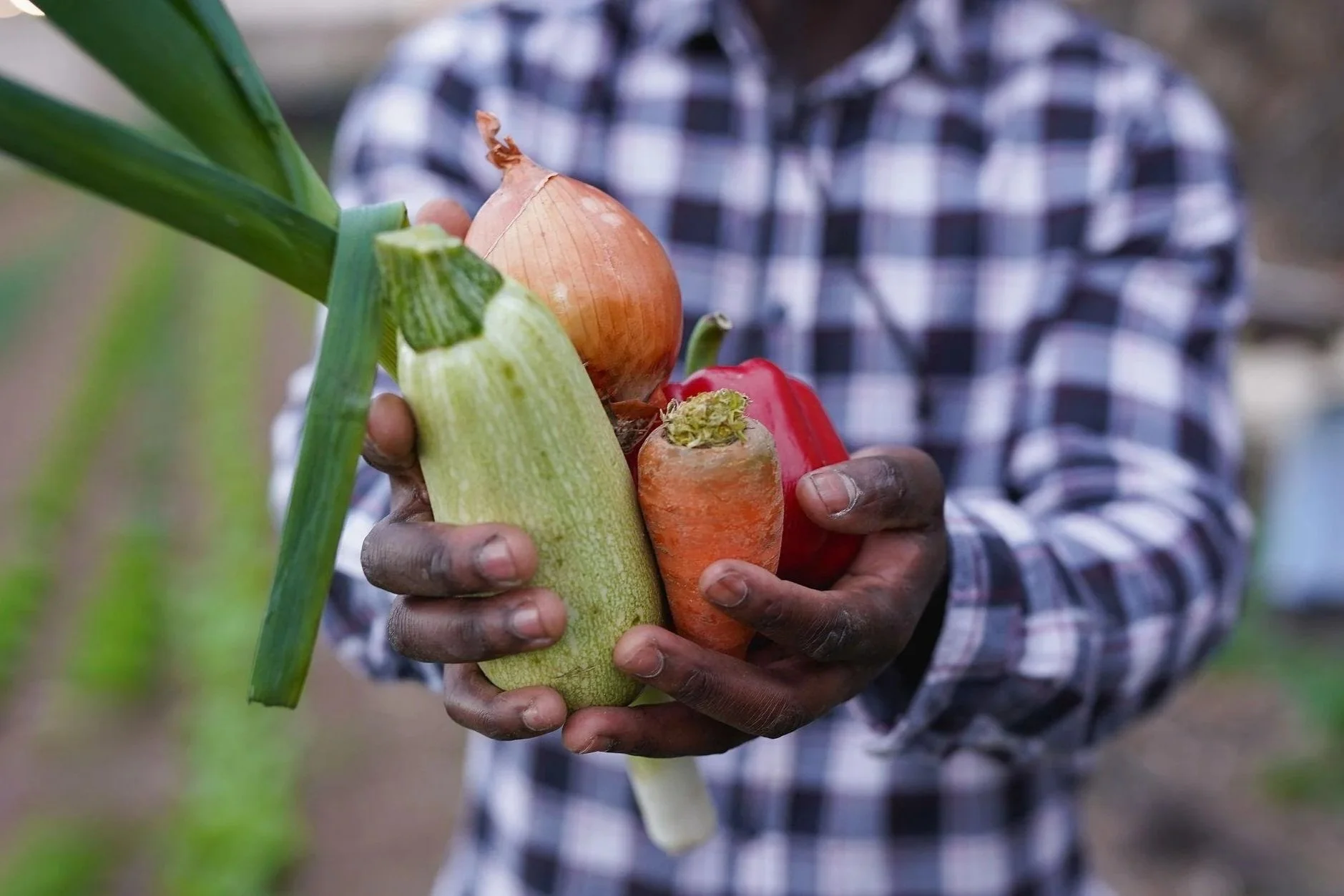
Farmer Holding vegetables he harvested from his garden
🎯The potential in front of us
💡Across Africa, about two-thirds of the world’s remaining uncultivated land lies waiting to be used productively. Yet every year, the continent spends billions importing food. That number is both a warning and an invitation.
💡If local entrepreneurs can create new value chains for example, processing cassava into Ugandan starch (rather than corn-based imports) then money stays in the community. Farmers earn more. Youth see new opportunities in agriculture. And consumers get food that is produced closer to home, safer and healthier.
💡These are the kinds of ventures Rootical works to build: small, practical steps that unlock a strategic problem or bottleneck, and make the system stronger from the ground up.
🌍A shared global moment
Every year on October 16th, the world marks World Food Day, a moment to reflect on how food connects us all. And in 2025 the theme, “Hand in Hand for Better Foods and a Better Future,” resonates deeply with our work.
It is a reminder that we are part of a much larger effort, one that calls for better ways to produce, distribute, and enjoy food. We maintain the conviction that no actor alone can build the future of food; it must be built hand in hand.
The Food and Agriculture Organization talks about the “Four Betters”: better production, better nutrition, a better environment, and a better life. These are not slogans to us. They are our purpose and what drives the founders and farmers we work with.
When a small cooperative starts selling organic flours directly to schools, that’s better nutrition. When a startup helps phase out chemical inputs by testing soil health and providing access to organic solutions, that’s a better environment. When a farmer earns enough to not worry about school fees, that’s a better life.

The inaugural Cohort during a field visit in August 2023.
Looking ahead
Rootical’s vision is straightforward: a food system that gives back more than it takes. One that values the farmer’s knowledge as much as the entrepreneur’s ideas. One where profit and purpose move together.
The challenges from climate shocks to declining public health are real. But we’ve seen that when people work side by side, even modest actions can shift the system. This World Food Day, we invite everyone who cares about the future of food to take one step closer to those doing the work on the ground. Talk to a farmer. Support a local food business. Mentor a young founder.
Big change starts with small partnerships and in our experience, the best ones begin hand in hand.