
How prototyping and rapid testing help Rootical founders turn assumptions into evidence and build businesses around real needs.
A founder can spend months developing a product, perfecting its packaging and preparing a business plan, only to discover that customers do not want it, cannot afford it or need something different.
The challenge is not always the idea. Sometimes, it is building too much before finding out whether the idea actually works.
At Rootical, this is one of the things founders learn during the Studio Venture Builder (SVB) journey: how to move beyond assumptions, put ideas into practice and learn from the people they intend to serve.
It starts with a simple principle: don't wait until you have built the perfect product to find out whether people need it.
Give the idea something to stand on💡
An idea can look promising on paper. A business plan can outline the market, identify potential customers and project revenue. But none of these necessarily tells you how people will respond when they encounter the actual product or service.
Will farmers buy it? Will retailers stock it? Is the price affordable? Does the solution address the problem as expected?
These are questions founders need to answer in the real world.
During the SVB journey, prototyping helps founders turn their ideas into something people can experience. It could be a small product sample, a packaging concept, an early version of a service or even a proposed distribution arrangement.
The goal is not to create a finished product. It is to make an idea tangible enough to test.
But building a prototype is only half the work. It needs to meet the market.
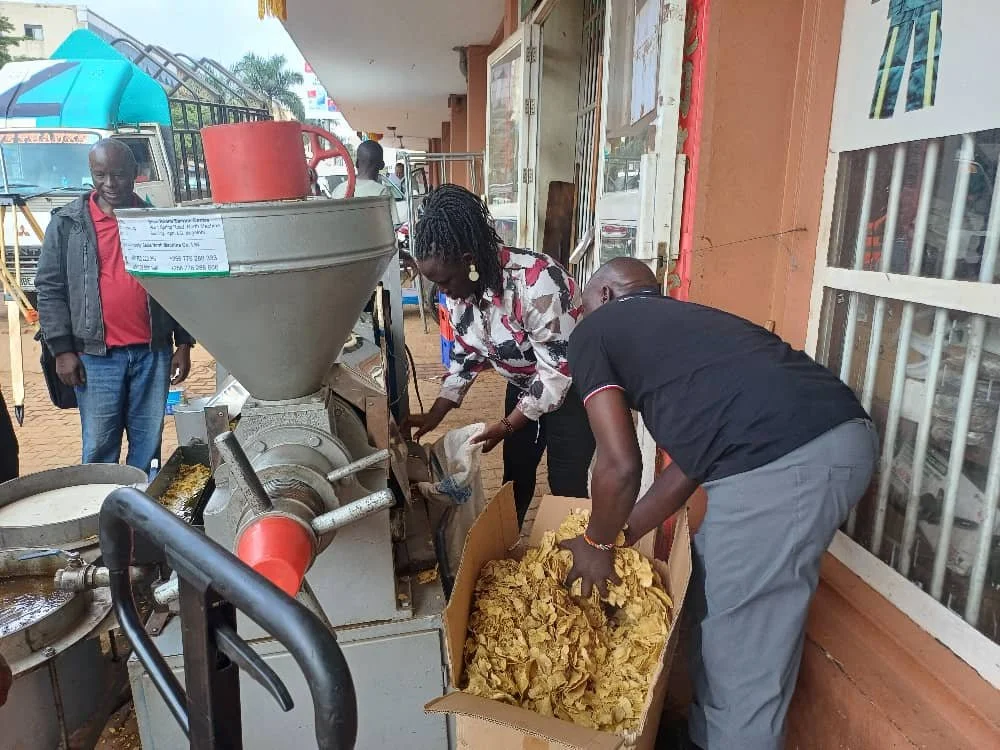
Akumu Juliet, Founder in Residence.
Prototypes her earlier soybean business idea by testing the extraction of cooking oil.
The Co-Existence Loop: Build, test, learn and repeat🔄
At Rootical, we approach prototyping and rapid testing as two interconnected activities. One gives the other purpose.
We call this the Co-Existence Loop:
💡 Concept → 🛠️ Prototype → 🧪 Rapid Test → 📚 Learn & Refine → 🔁 Repeat
A founder starts with an idea based on an identified problem and a set of assumptions about how a solution might work.
The prototype gives those assumptions a tangible form. Rapid testing then takes it to the people who matter: potential customers, farmers, retailers, suppliers and other actors within the food system.
Their responses provide an opportunity to understand what works, what is missing and what needs to change.
The founder takes those lessons back into the next version of the solution.
Sometimes, the changes are small. Other times, testing reveals that the original approach needs to be reconsidered entirely.
That is the point. The objective is not to prove the first idea right. It is to discover what the venture needs to get right.
When assumptions meet the market🌾
We have seen this learning take shape through the experiences of founders in our venture-building journey.
For Chebet Diana, it started with 25kg of potato seed.
As founder of Sebei Irish Seed Limited, Diana identified a challenge facing potato farmers in Kapchorwa: access to clean, reliable Irish potato seed.
She believed farmers would be willing to pay for quality seed they could trust. But rather than rely on that assumption, she took 25kg of clean, branded Rwangume Irish potato seed directly to the market.
The response was encouraging. Farmers bought the seed, others placed pre-orders, with 10 confirmed. The branding and packaging also gave Diana an opportunity to explore how presentation could influence farmers' confidence in the product.
It was a small market test, but it gave her something a business plan alone could not: evidence of interest from the people she wanted to serve.
It also revealed practical lessons for the next engagement, including the need to carry more samples and prepare flyers.
Read about Diana's first market test in Kapchorwa.
For Emmanuel Luwemba of Eden Seeds, the learning came from rethinking distribution.
Eden Seeds set out to improve smallholder farmers' access to quality indigenous seeds through local agro-input shops.
But early market engagement revealed a challenge. Smaller shops could typically purchase only 20–30kg of seeds per month during good seasons. While they provided useful feedback and an entry point into grassroots markets, their limited purchasing capacity made the distribution approach difficult to sustain commercially.
Field visits with Rootical's Venture Builder, Isaac Muhofa, revealed another opportunity: larger agro-input shops could purchase up to five times the volume.
This insight helped Eden Seeds rethink its distribution model. The venture shifted its primary focus towards larger shops while maintaining relationships with smaller retailers as testing grounds for new products and sources of market feedback.
It also began consolidating orders and organising delivery routes to reduce transportation costs.
The lesson extended beyond the seed itself. A product can address a genuine need, but how it reaches customers matters just as much.
Read Emmanuel's story of learning to fail forward with Eden Seeds.
These two experiences show why founders need to get out of the planning room. Sometimes, a small experiment can reveal something that months of assumptions would miss.
Building Beyond Assumptions🌍
Prototyping and rapid testing are not standalone exercises at Rootical. They are part of a wider, human-centred and systemic venture-building process.
In the 2025 journey, 50 founders started with the Food System Leadership Bootcamp, 25 progressed into the SVB journey, 16 completed it, and eight were invited to continue into the Studio.
Throughout this process, founders work through problem validation, ideation, prototyping, rapid testing and piloting. They learn to examine challenges within the food system, engage the people affected by them and develop business solutions that respond to real needs.
This is particularly important when building regenerative agri-food businesses. A solution must make sense not only as a product but also within the realities of the farmers, suppliers, retailers and consumers it connects.
Testing helps founders understand whether a solution is useful, accessible and commercially viable before committing more resources to building and scaling it.
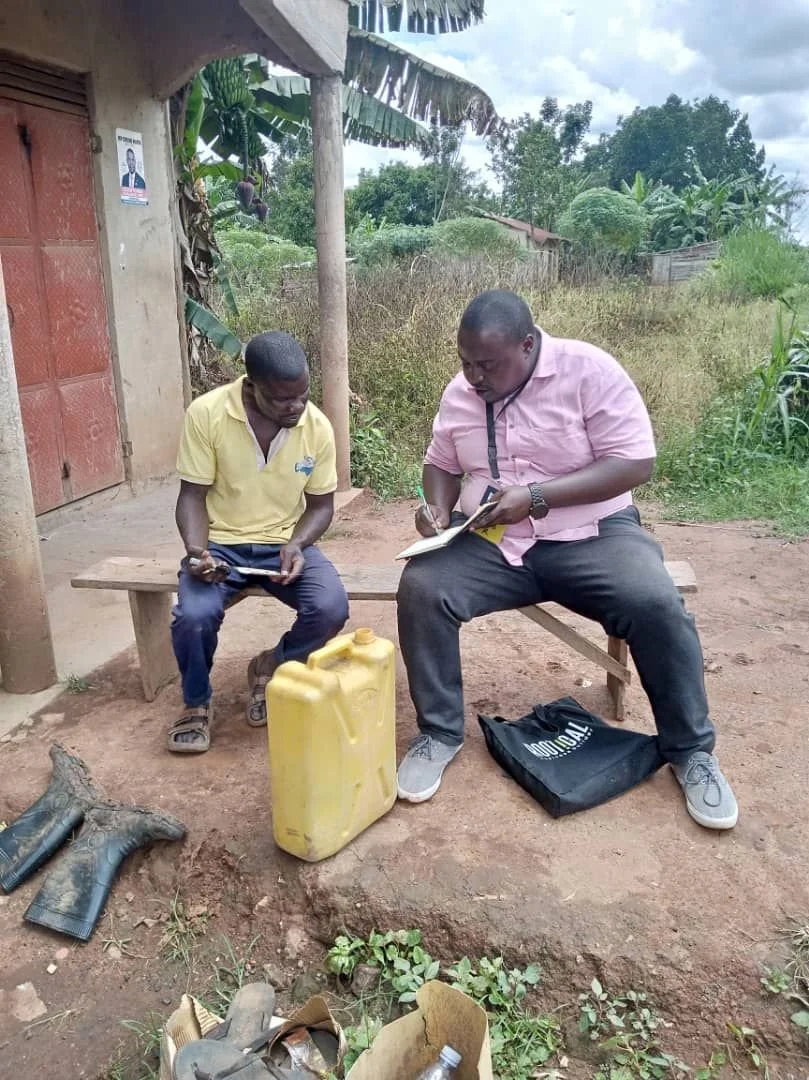
Oreb Rubahimbya engages with a farmer in the field, listening and learning from their experiences.
Fall in love with the problem, not the solution❤️
There is another important lesson behind this process: founders must be willing to let go of ideas they have become attached to.
When you have invested time and energy into developing a solution, negative feedback can be difficult to accept. But a customer questioning your price, a retailer declining your product or a farmer suggesting a different approach is not necessarily a setback.
It is information.
If the product needs to change, change it. If the price is not right, revisit it. If the distribution model is not working, test another approach.
Fall in love with the problem, not the solution.
When the problem remains the focus, feedback becomes an opportunity to build something better rather than a reason to defend what you have already created.
And this mindset should not end when a business launches. Markets shift, customer needs evolve and business models need to respond. Testing, learning and refining remain important as ventures grow.
At Rootical, we believe building businesses that genuinely serve people requires founders who are curious enough to question their assumptions and courageous enough to change direction when the evidence calls for it.
A good idea may be where a venture begins. But it is what founders learn from putting that idea into practice that brings it closer to becoming a business people actually need.
Build. Test. Learn. Refine. Repeat.🔄