
How Regenera Wallet is Helping Farmers beyond finance.💸
📍In Nabalanga village, farmers are meeting to learn from one another, test new practices and begin to take greater ownership for the future of their farms as they adapt and transition to agroecology
🍃At around 1pm in Nabalanga village, Gobero, the home of Mr Paul Kasoma a farmer slowly began filling with people,farmers arrived from different parts of the community, open minded and ready to unlearn, learn and relearn, with questions from their own fields and experiences from the season.
By the time the meeting began, 37 farmers had gathered, they had come to learn about regenerative agriculture, but the conversation was about more than compost pits, banana suckers or mulching. It was also about money, risk, productivity and what it takes for a farmer to make changes that may only show their full value over time.
📌The meeting was organised by Regenera Wallet, a venture in the Rootical Studio founded by Oreb Rubahimbya that aims to bridge the financing gap facing Uganda’s smallholder farmers by providing affordable, collateral-free digital loans. The business is supported by community-based agents who connect farmers to financing, guidance and regenerative farming practices.
Rather than treating agricultural finance as a transaction that begins with a loan and ends with repayment, Regenera Wallet is exploring what becomes possible when farmers also have access to knowledge, community support and practical guidance around the decisions they make on their farms.
For the farmers in Nabalanga, that support is increasingly taking the form of regular learning sessions, facilitated with the help of village agents and technical partners.🌱
One of those partners is Eden Seeds, one of Rootical’s pioneering businesses, founded by Emmanuel Luwemba, with a focus on access to quality indigenous seeds by smallholder farmers. Through this collaboration, the two ventures are bringing together two things that farmers often need at the same time: the resources to invest in their farms and the knowledge to make those investments count.
The second training in Nabalanga was part of a larger experiment: What happens when financial inclusion is paired with knowledge inclusion, and when farmers themselves become part of the learning system?
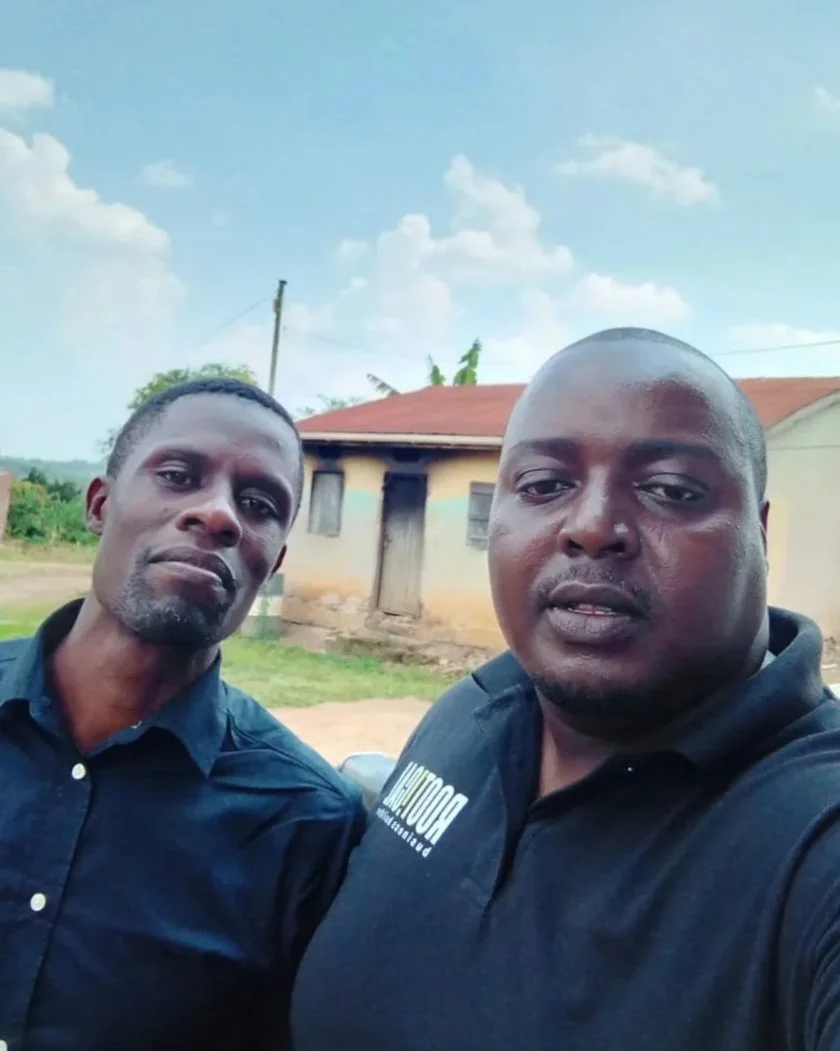
Oreb Rubahimbya (Founder Regenera Wallet) left
Emmanuel Luwemba(Founder of Eden Seeds) right
During the second training at Nabalange village, Gobero Wakiso District.
📌The knowledge gap behind the farmer
🔄For many farmers, access to finance is only one part of the equation.
Knowing what to do with that finance and how to make farming more productive without steadily degrading the soil, increasing dependence on costly inputs or exposing households to unnecessary risks is another challenge altogether.
Uganda's agricultural extension system illustrates just how difficult it can be to get practical support to every farmer. The Ministry of Agriculture previously reported an extension worker-to-farmer ratio of about 1:1,800, following improvements from roughly 1:5,000. More
That means one extension worker can potentially be expected to serve an enormous number of farming households.
At the same time, farmers are working in an increasingly uncertain environment, dealing with floods, prolonged droughts, erratic rainfall, land degradation and low productivity. FAO has highlighted climate variability and land degradation among the challenges affecting Uganda's agricultural systems.
The result is a familiar problem: farmers may know that something needs to change, but practical guidance is not always available when and where they need it.
This is where Regenera Wallet's approach begins to look different.
Rather than seeing the farmer only as a borrower, Regenera is beginning to see the farmer as someone who needs a wider support system around the financial decision. Finance can provide the means to invest, but knowledge, relationships and continued engagement can help determine whether that investment produces lasting value.
🎯Starting with what farmers are actually experiencing
⚠️Before the training, agroecologists had visited farmers individually and conducted baseline assessments to understand what was happening on their farms.
Rather than arriving with a generic list of recommendations, the training started with those findings.
Farmers were grouped according to their current level of engagement with agroecological practices, including Agroecology Champions, farmers who were already adopting some practices, and those with little or no agroecological practice on their farms.
The classification was not intended to put farmers into boxes. Instead, it created a starting point for conversation and made it possible to understand where each farmer was on the journey.
It also created an opportunity for farmers who were already experimenting with regenerative practices to become examples for others.
These Agroecology Champions are particularly important to the model because they show that the transition does not have to remain theoretical. There are farmers within the community already practising, learning and adapting, and their farms can become spaces where others see what these practices look like in real conditions.
In Nabalanga, that meant putting the discussion directly around the crops farmers depend on most: coffee and bananas.✨
🌍From banana suckers to compost pits
Agroecologist Fahad brought banana planting material to the session, turning what could have been a technical lecture into a practical demonstration.
Farmers were shown how to select and prepare banana suckers and what to look out for when planting, particularly when dealing with disease risks.
The questions were practical because the problems were practical: why are some banana plants failing to produce as expected, where should planting material come from, how should suckers be prepared, and what can farmers do to protect the health of their crops?
Emmanuel then took the conversation further into regenerative agriculture, introducing farmers to organic inputs and discussing ways of building healthier soils.
One of the proposed practices was simple but powerful: composting.
Farmers were encouraged to establish compost pits so that organic material from their farms could be turned into manure and returned to the soil. They also discussed mulching and intercropping, practices that can help farmers manage soil and moisture while making better use of their land.
These are not abstract ideas. They are practices that can be seen, tested and adjusted on the farm.
And there is growing evidence that these approaches can matter in Uganda. FAO research on adaptation to rising temperatures found positive associations between practices such as organic fertiliser application, coffee-banana intercropping and cereal-legume intercropping and agricultural production value under high-temperature conditions.
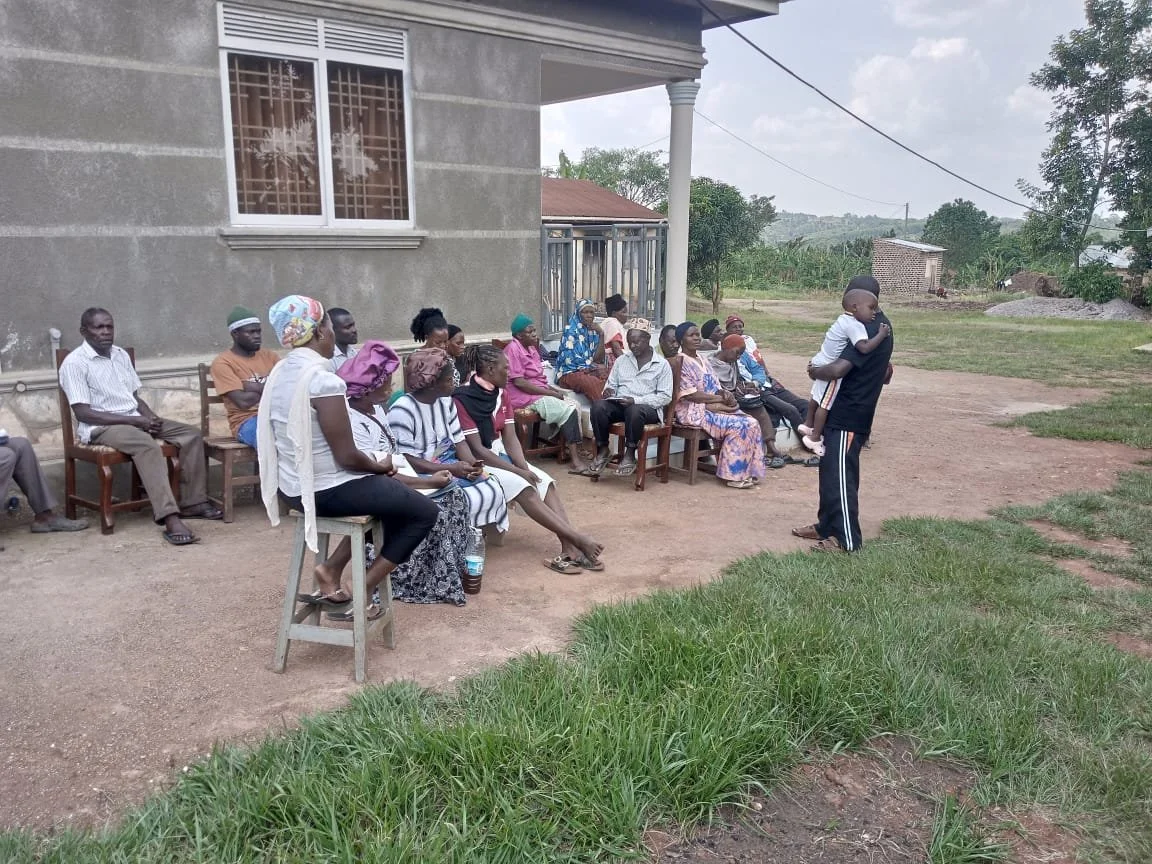
Fahad Musaazi(trainer carrying a baby) an agroecologist training the farmers
Finance meets the farm🌿
🌟The conversation eventually moved back to money, because for farmers, agricultural decisions and financial decisions rarely exist separately.
Farmers raised questions about their loans, including requests for longer repayment periods and larger amounts. Regenera Wallet used the opportunity to explain how consistent and early loan repayments can help farmers build a stronger track record and potentially grow their financing opportunities over time.
This is an important part of the model.
Regenera Wallet is not simply providing farmers with money and stepping away. Its engagement with farmers creates an ongoing relationship in which financial access is connected to community engagement, learning and follow-up.
For a farmer, that can mean having access to finance while also being connected to a network where they can ask questions, learn from others and receive practical guidance.
It reflects a simple reality: Financial resilience and farm resilience are closely connected.
A farmer may want to invest in better planting material, soil restoration, diversification or improved production, but those decisions are influenced by cash flow, risk and the ability to repay what has already been borrowed.
The collaboration with Eden Seeds adds another layer to that relationship by bringing technical agricultural knowledge closer to the farmers themselves.
The first signs of transformation
✨At the end of the meeting, farmers were not simply asked whether they had enjoyed the training. They were asked to identify practices they could begin implementing on their own farms.
Some committed to regular mulching of their tomatoes, coffee and bananas. Others committed to establishing compost pits, while others chose intercropping.🌳
Of the 37 farmers who attended, around 15 committed to begin adopting or transitioning towards agroecological practices, while approximately 10 were already identified as Agroecology Champions who would continue along the path they had already started.
But there is an important distinction here- a commitment is not yet a transition.♻️
The team plans to return to the farmers over the coming months to see whether the practices they committed to are actually being implemented.
That is where the real measure of success will come from not from how many hands went up during a training session, but from what changes on the farm over time.🌿
Moving from founder-led to farmer-led learnings☀️
🎯Perhaps the most interesting development in the second training was not one of the farming techniques. It was the growing role of the farmers themselves in organising the learning process.
Rather than making every meeting dependent on the physical presence of the Regenera Wallet team, the village agent was given greater responsibility for mobilising farmers and helping to set the rhythm of the sessions.
Regenera Wallet supports the process by helping with mobilisation, providing the agenda and facilitating resources for the meeting, while the village agent brings the farmers together and coordinates the session. In this case, the agent was given UGX 50,000 to facilitate the meeting, including refreshments.
The idea is bigger than one village.🌾
If the programme reaches ten villages, several communities may need to hold learning sessions around the same time. At that scale, the question becomes whether the model can continue to depend on a central team being physically present everywhere.
Regenera Wallet is beginning to experiment with another possibility: Building a system that farmers can increasingly run themselves.
That means village agents, Agroecology Champions and other farmers becoming part of the infrastructure through which knowledge moves.🍃
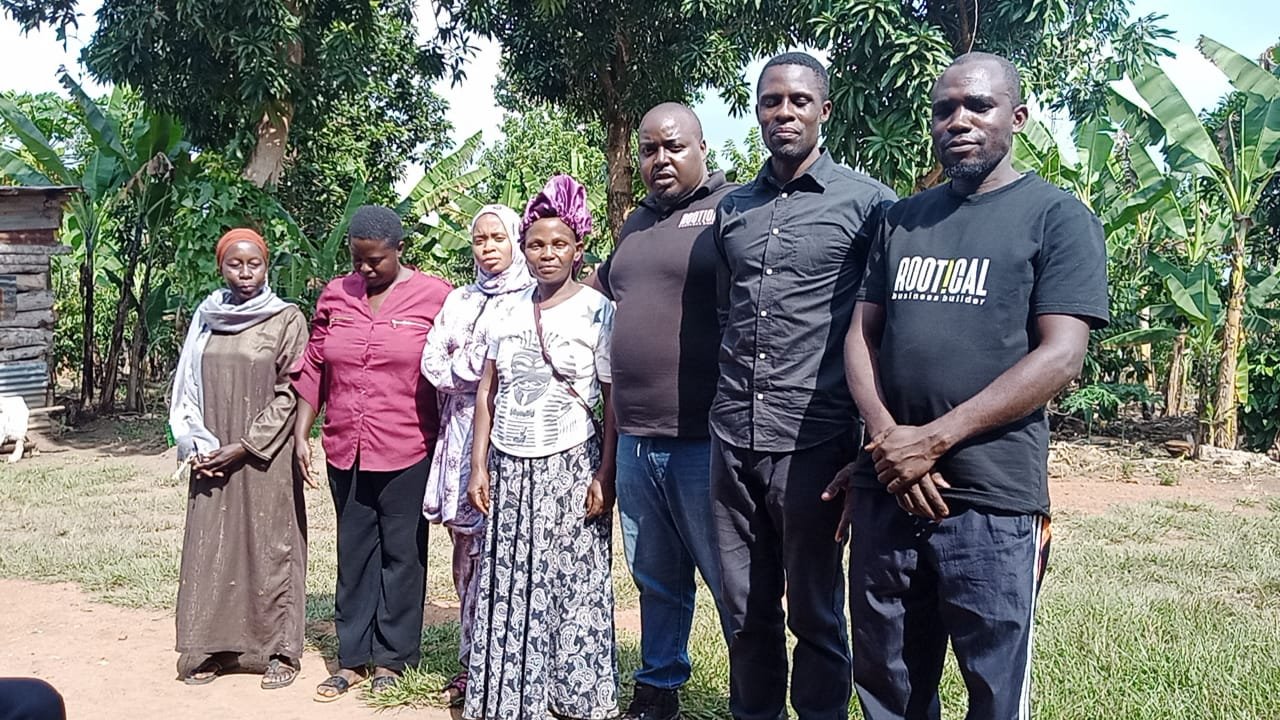
Fahad Musaazi extreme left, Emmanuel Luwemba, Oreb Rubahimbya and some the farmers who attended the training.
The farmers to teach the farmers🍃
The farmers are the true agroecology champions and have a particularly important role to play in this next phase. They can become the people others look to when they want to see whether a practice works in real conditions.
A farmer considering composting may learn more from seeing another farmer's compost pit than from hearing about composting in a presentation. A farmer uncertain about intercropping can learn from someone who has already tried it, adjusted it and observed the results.
This is the power of peer learning: Knowledge moves horizontally, not only from an expert down to a farmer.
The model therefore brings together different kinds of knowledge.🌳
Eden Seeds contributes technical agricultural expertise and farmer-level assessments. Regenera Wallet contributes financing, community engagement and the structures that help bring farmers together. Village agents contribute local relationships and coordination. Agroecology Champions contribute lived experience. And the farmers themselves bring the realities of their own fields.🌾
Together, these pieces create something that a classroom alone cannot.
What could the future of these trainings look like?♻️
The future of the Nabalanga training may not be about holding bigger workshops with more farmers sitting in one room.
It could be about creating smaller, more frequent and increasingly farmer-led learning communities.
The team is still experimenting with how often the meetings should happen, but the feedback from farmers already points towards a desire for more regular engagement. That matters because regenerative agriculture is not a one-day intervention.🌍
A farmer may build a compost pit but need support to maintain it. Another may begin mulching but need time to understand how it affects moisture and weeds. Someone may start intercropping and later adjust the crops they combine.
The real opportunity is therefore to create a rhythm of learning in which farmers can try something, return with questions, share what worked and what did not, and learn from one another.🌳
Over time, the vision could extend beyond individual training sessions towards a community of practice across villages, where Agroecology Champions become demonstration farmers, village agents coordinate local sessions, technical experts provide support when needed, and Regenera Wallet continues connecting financial access with the knowledge required to make that finance more productive.
If that model works, the training itself becomes less important than the system it creates.
Building more than productive farms💧
The collaboration between Regenera Wallet and Eden Seeds is significant because it brings together two complementary pieces of the agricultural puzzle.
Eden Seeds, one of Rootical's pioneering ventures founded by Emmanuel, is helping bring agricultural knowledge and quality planting material closer to farmers, while Regenera Wallet is exploring how financial access can be paired with the relationships and support farmers need to make better long-term decisions.
Together, they are testing an idea that is simple to articulate but much harder to build: What if financial inclusion also meant knowledge inclusion?🌍
What if a farmer receiving financing also had access to practical guidance on how to protect the soil that generates their income?
What if farmers could learn not only from experts, but from the people farming beside them?
And what if the people already practising agroecology could become the teachers, demonstrators and champions of the next wave of adoption?
The work in Nabalanga offers an early glimpse of what that could look like.🌻
The 37 farmers who gathered at Mr Paul Kasoma's home did not leave with identical plans. Some committed to mulching, some to composting, some to intercropping, while others were already leading the way. Others were still watching, asking questions and deciding whether they were ready.
That is perhaps the most honest picture of agricultural transition, farmers do not all move at the same speed, and meaningful change cannot be measured by a single training day.
The opportunity now is to keep showing up, keep learning and build a model where farmers increasingly take ownership of the process themselves.💧
Because regenerative agriculture is not only about changing what happens in the soil but what is changing how farmers access finance, how knowledge moves through communities, and how people work together to build farms that can remain productive for years to come.