
The Cooperative Linking Farming and Better Health in Eastern Uganda🔗
🍃In the quiet villages of eastern Uganda, farming is rarely just about food. It is about survival, education, dignity and increasingly, health.
📍In Kaberamaido and Soroti, a group of more than 800 farmers under the Aperkira Farmers COOP is slowly reshaping how agriculture is understood and practiced. Their work is not loud or heavily publicised. It happens in gardens, in small meetings under trees, and in conversations between neighbours who are trying to figure out how to make farming work again.
📌At the centre of it all is Michael Elweu, a health worker and chairperson of the cooperative.🍃
He is not your typical farmer leader.
During the week, Michael works at Soroti Regional Referral Hospital, treating patients. But after work, he heads to his garden.
“I see the same problems every day in the hospital,” he says. “People are getting sick from diseases that are linked to what we eat.”
Hypertension, diabetes, and cancers linked to diet are no longer rare cases in his wards. For him, the connection between unhealthy food and illness is no longer theory, it is something he sees daily.✨
That is what pushed him back to farming. Not as a hobby. But as a response.
“Farming cannot be done on WhatsApp or phone calls,” he says with a slight smile. “You have to be there. You have to touch the soil.”
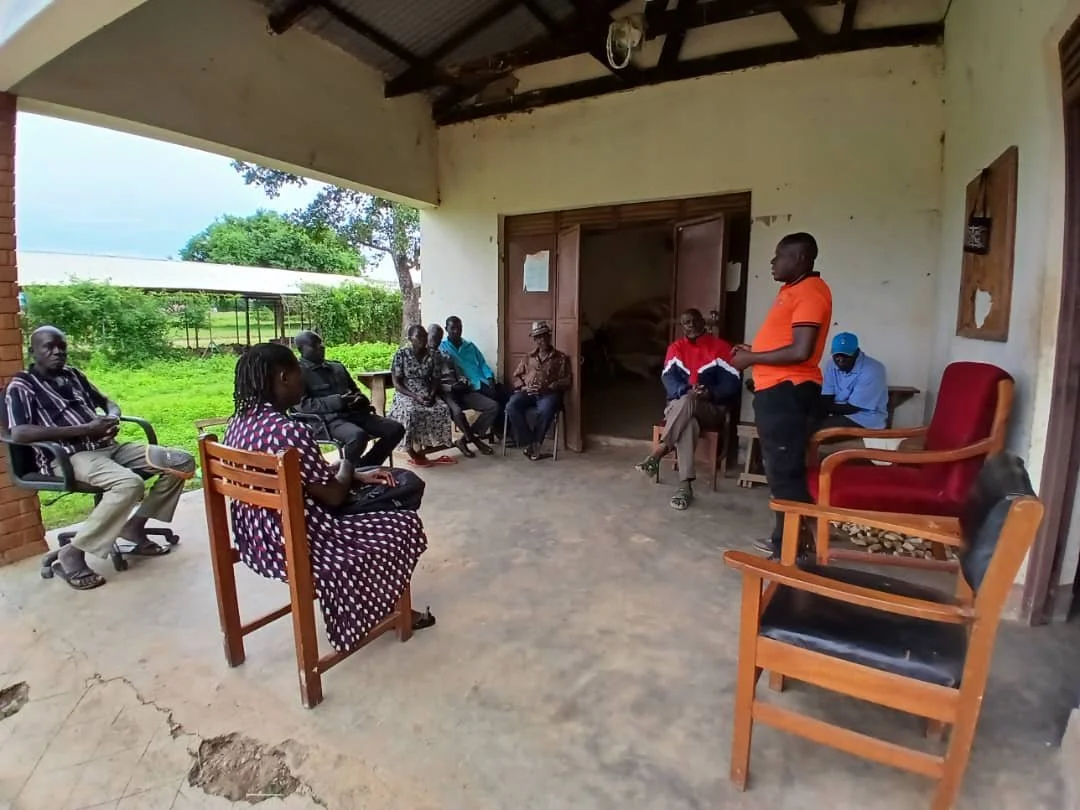
Michael Elweu(Standing) together with Joan Anyait(fore left) founder of EcoVein and some of the farmers
📌Between two types of farmers
🔄Some farmers are deliberate. They observe their soil, rotate crops, and stick to chemical-free methods even when it is difficult. While others, often out of pressure or uncertainty, lean toward quicker solutions especially chemicals they believe will save time or guarantee yield.
Michael calls this the difference between intentional farmers and what he calls “casual farmers.”
“It is not about laziness,” he explains. “It is about pressure. Farming is risky.”
And in a place where one bad season can mean school fees are gone, that pressure is a powerful force.
🎯One widow, one farm, many responsibilities
⚠️For farmers like Immaculate, farming is not a choice between systems. It is survival. After losing her husband, she was left to raise her child alone. Today, she depends entirely on her farm to keep the household running.
Through the cooperative, she has been able to sell her produce more reliably and keep her child in school now in secondary level. Her story is not presented as exceptional within the cooperative. It is common.
And that is perhaps what makes it powerful.✨
🌍A strong system of production, but weak markets
Walk through Aperkira’s farming communities and one thing becomes clear: there is no shortage of food.
💡Farmers here can produce. In fact, estimates suggest that if each farmer produces just 100 kilograms of millet per season, the cooperative could easily generate over 80 tons of grain annually. The problem is not production but rather what happens after harvest.
Most farmers still sell raw grain at very low prices because they lack reliable markets, storage systems, and processing facilities. That means value is lost before the food ever leaves the village.
A small experiment with big hopes🌿
To change this, a small pilot has started with 50 farmers.These farmers are producing millet under strict conditions with no chemicals, consistent quality, and traceability from the garden to the buyer.🌟
Each farmer supplies a fixed amount, and the idea is simple: prove that clean, reliable production can also be profitable. If it works, it can be expanded and if it fails, it will still offer lessons.
The missing piece: Processing
🌟For years, one of the biggest challenges has been no electricity, no milling. Without processing, farmers are forced to sell raw grain. That means they lose most of the value in the chain.
Now, with electricity slowly reaching the area, the cooperative is preparing to start milling millet into flour locally.
It sounds simple, but for farmers, it could change everything, meaning more income stays in the community.
A worrying discovery in grain storage
✨During visits to larger grain stores such as Katine, another issue came up. Some maize was being treated with aluminium phosphide tablets to kill pests. The chemical releases a gas that is highly toxic if not handled properly.
The concern is not just storage, it is what happens later when that grain is milled and sold, especially to institutions like schools.
It raises uncomfortable questions about food safety that many communities rarely think about, but increasingly need to.🌿
Small cooperatives, bigger trust
🎯Interestingly, smaller cooperatives like Aperkira appear more open to change than larger, more established ones. They may not have the same infrastructure or scale, but they have something else: trust.
At Aperkira, women sit together cleaning grain. Farmers show up for meetings. Leaders know their members by name. It is less formal, but more connected and in many ways, that makes change easier.🍃
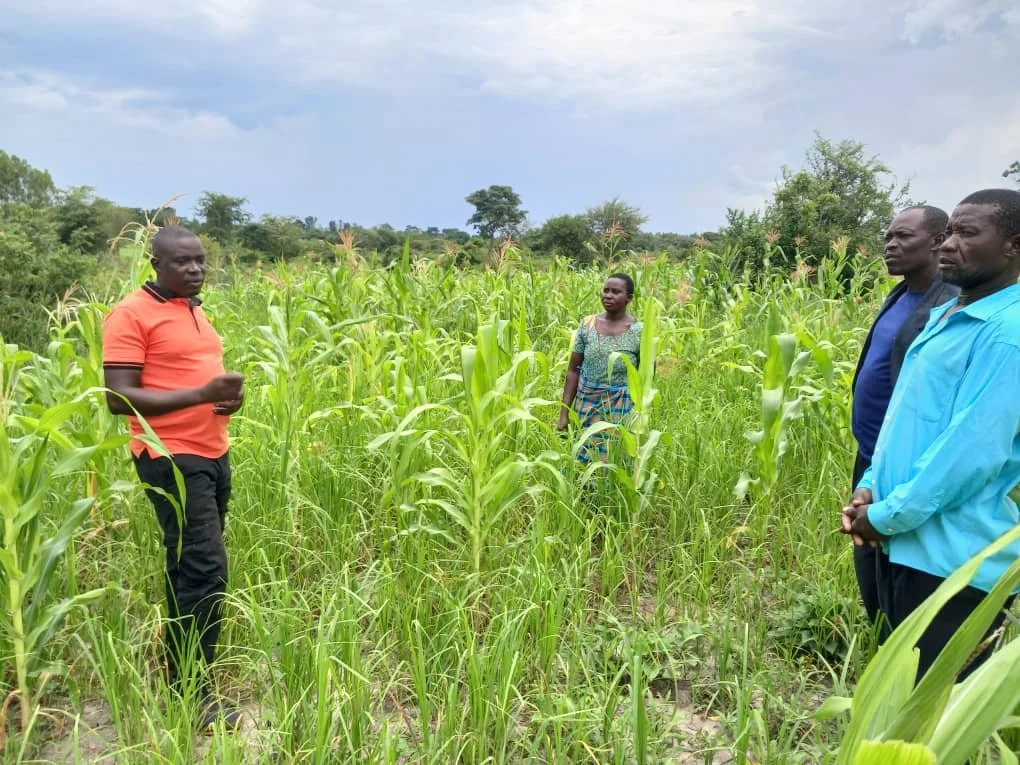
Michael Elweu with other farmers in his garden
Still a work in progress🍃
The work happening here is not perfect, and it is not finished. It is being tested in real time through trial, error, and adjustment.
💪Joan Anyait, Rootical Founder-in-Residence, has been working closely with the cooperative to co-design a regenerative business model that strengthens market access, improves value addition, and creates reliable income for farmers. She describes it simply:
“We are learning as we go. The field teaches you what no strategy document can.”
At the heart of it, Aperkira’s story is about farming, yes, but It is more about whether rural communities can build food systems that are healthy, profitable, and sustainable at the same time.
🤝The answer is still unfolding. But what is clear is this: when farmers are supported with markets, simple infrastructure, and trust, they do not just grow food.
They build systems.
And in places like Soroti and Kaberamaido, that might be where real change begins.👏